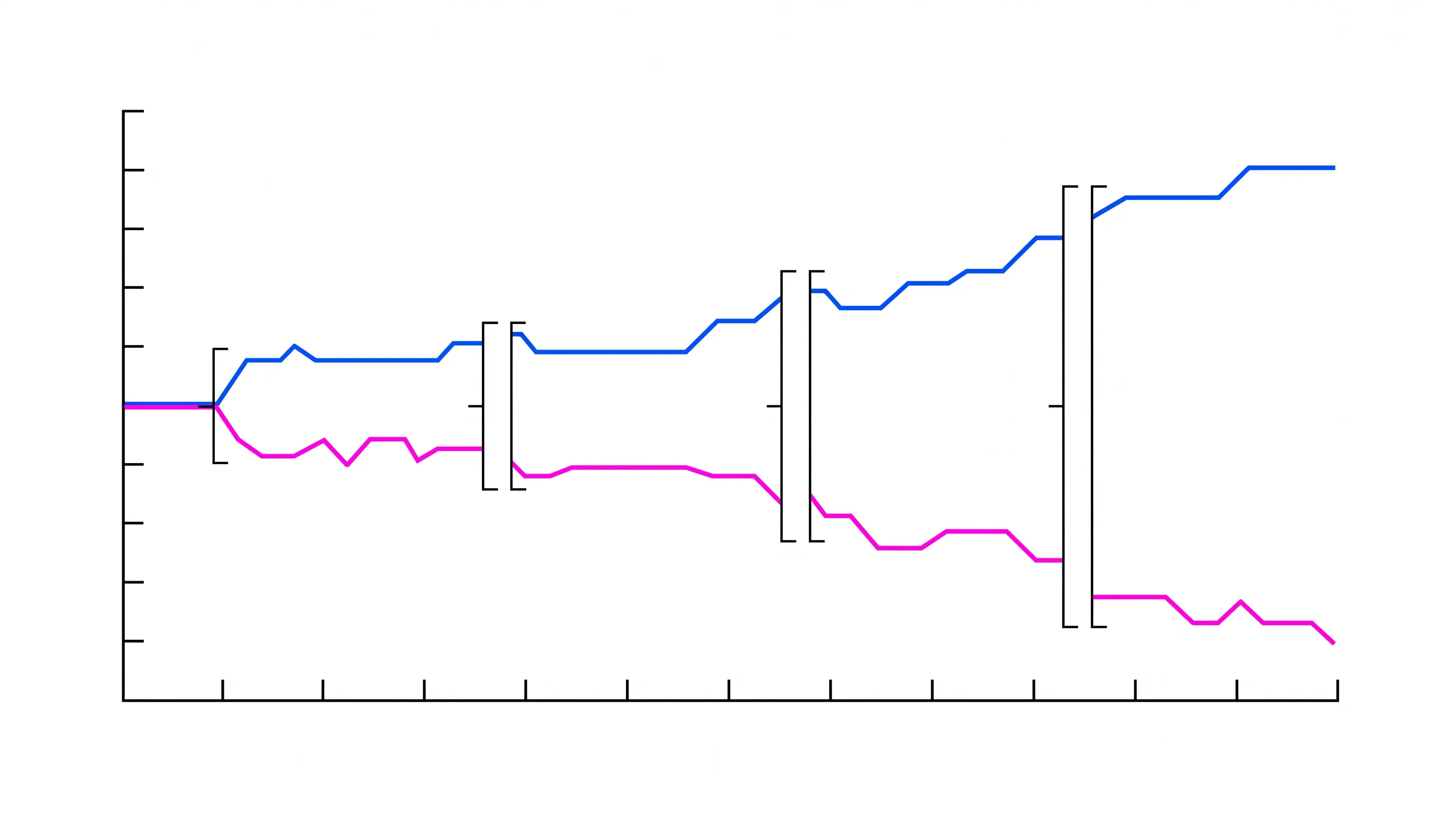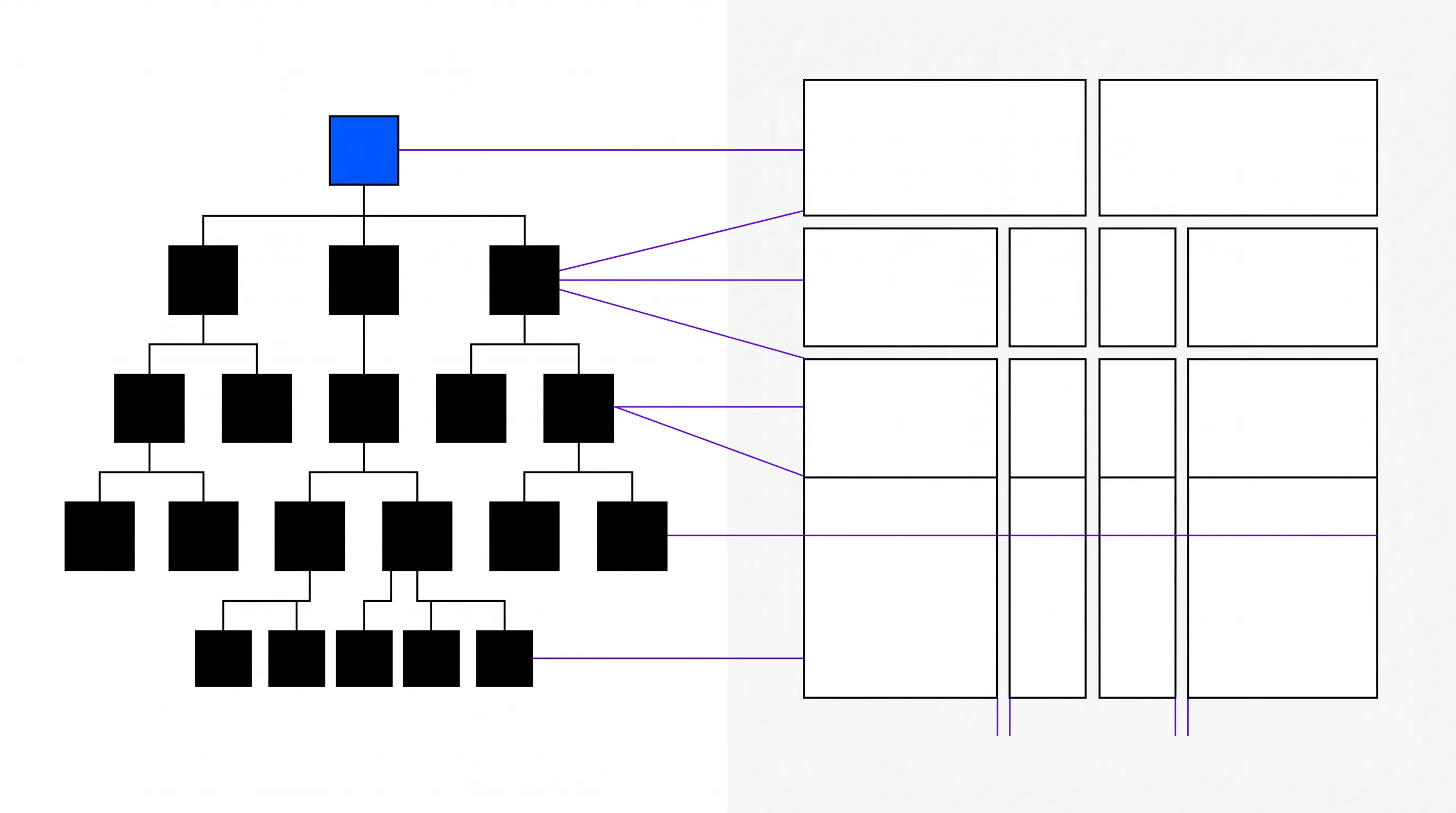
When every true claim carries equal weight, the investor has to rank them. They have twenty minutes of attention and less context than anyone in the room. Decide the thesis first, in one sentence, then sort every other claim into what carries it and what answers a question nobody has asked yet.
The pattern
A company has been working for six years. The platform is real, the lead program has data, the second program is differentiated, the team has run this play before, the market is large, the team knows the regulatory path, and the team has solved manufacturing.
Every one of those statements is true. Each appears in the deck, on the website and in the data room, at similar size and tone, with similar supporting detail.
The failure is a set of strong claims with no instruction about which one the company is asking to be funded on.
Why it breaks
Hierarchy is an argument, and someone has to make it. A design pass at the end cannot do it.
Inside the company nobody wants to make it, because every claim belongs to somebody. The platform belongs to the founding science. The second program belongs to the person who fought for it. The manufacturing story belongs to the operations lead who solved a hard problem. Ranking the claims means telling the senior people behind them that their contribution is supporting detail this quarter.
So the company defers the ranking and builds the materials as a union of what everyone contributed. The deck grows. The website and the scientific figure grow too, with a new section and a fourth panel.
The investor who reads that has to do the ranking alone. It will be poor, and it will point in a direction the company did not choose.
What changes
Decide the thesis first, in words, before anyone designs anything.
One sentence that states what the company is asking to be believed. Then rank every other claim by how direct its support for that sentence is. Three tiers are enough in most cases: the thesis, the claims that carry it, and the detail that answers a question the audience has not asked yet.
Keep the third tier and move it to the appendix, the data room, the second conversation or the science page, and off the homepage. Detail placed where it answers a question is worth more than the same detail placed where it competes with the thesis.
The practical result
The homepage makes a single point and the first four slides build a single argument. The scientific figure has a focal point and everything else in it is quieter, and the pipeline table stops implying that all the programs are equally close.
And the material gets shorter, because a claim ranked third no longer needs to fight for space in the first two minutes.
Hierarchy turns an inventory into an argument, and an investor can evaluate an argument.