A layout is a set of decisions about importance. Design it before the team settles the argument and column widths and module sizes make those decisions. Write what each page has to establish, and in what order, then let design express a decision.
The pattern
The website project starts with a sitemap and a set of page comps. The science content reads “TBD, from the deck.” Design proceeds. Six weeks later the layouts get approval and the real content arrives.
It does not fit. The platform explanation needs four steps and the module fits three. The mechanism figure needs a caption longer than the design allows. The pipeline has two programs at the same stage that the layout implies are sequential.
The team keeps amending the design and defends the layout. Nobody defends the argument.
Why it breaks
A page layout is a set of decisions about relative importance. How much space something gets, what appears before what, what is above the fold, what is a heading and what is a caption. Those are all statements about hierarchy.
When the layout comes first, column widths and the amount of lorem ipsum in the module make those statements by default. The section the designer built first makes some too. Then the team fits the real science into decisions nobody made about it.
The narrative loses every one of those negotiations, because the layout already exists and looks finished.
What changes
Settle the argument before anyone draws anything.
Write what the site has to make an investor understand, in order. Decide what leads on each page and what supports it. Decide which scientific relationships need sequence and which need comparison. Decide which are single facts that can sit in a sentence. Decide what comes off the site.
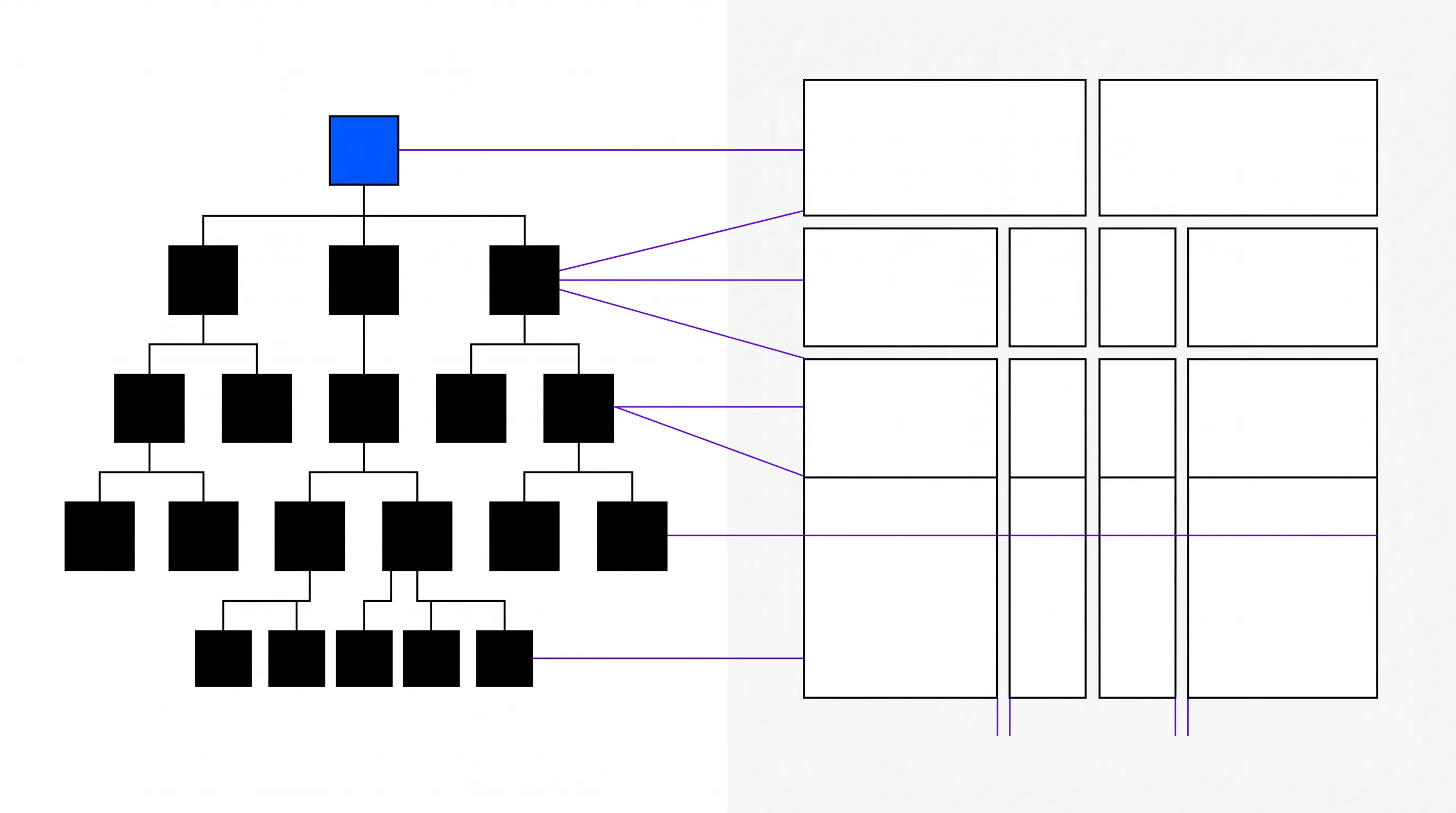
That output is a structure, a ranked list of what each page has to establish, and in what order. Design works from that list.
The practical result
When teams build layouts around the shape of the argument, fewer need a second version.
A mechanism that needs four states gets an interaction, because the structure said it needed four states before anyone drew a box for it.
The review cycle changes too. Stakeholders argue about the structure while it is still cheap to change, before a comp takes two weeks and carries everyone’s expectations.