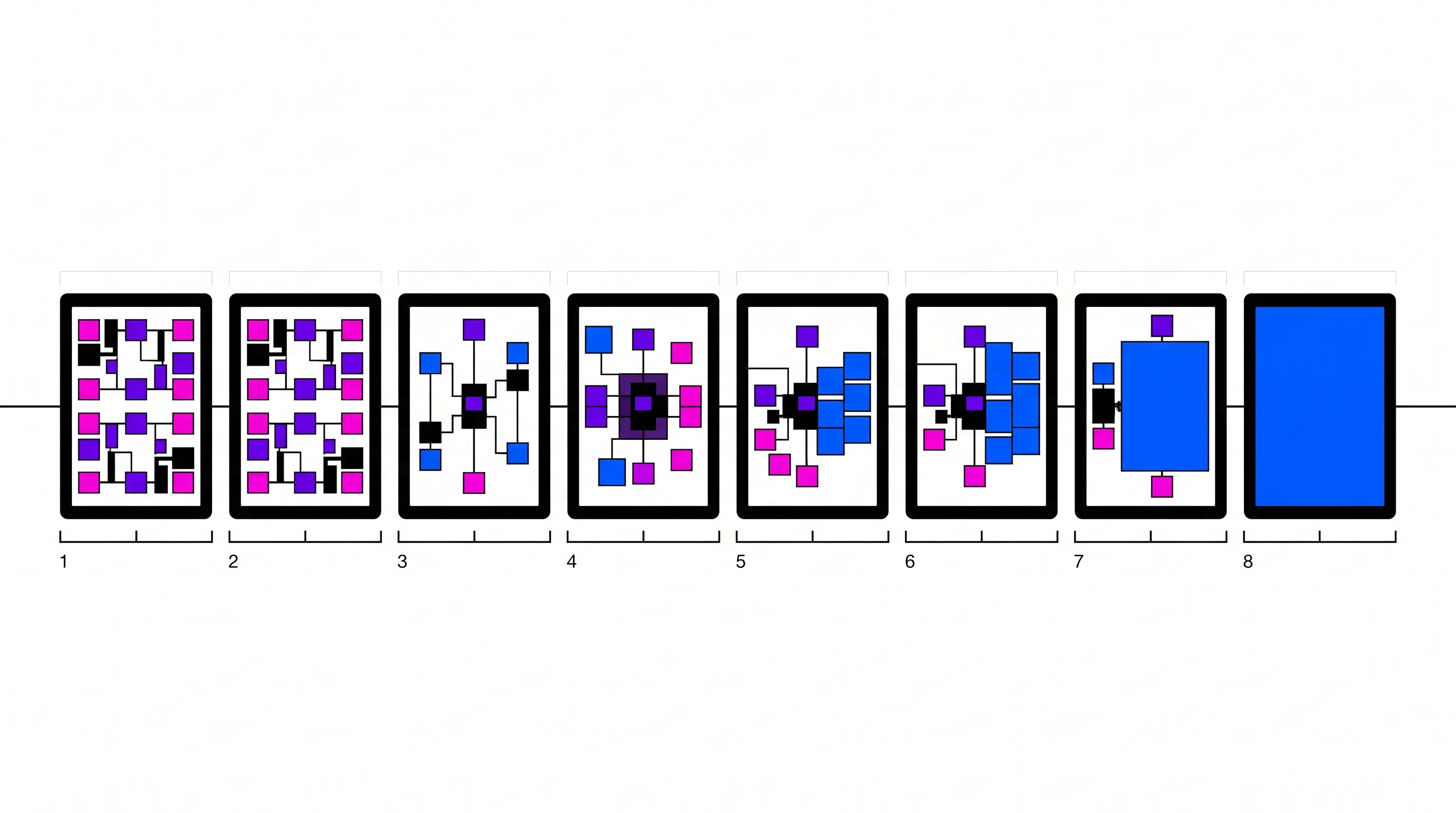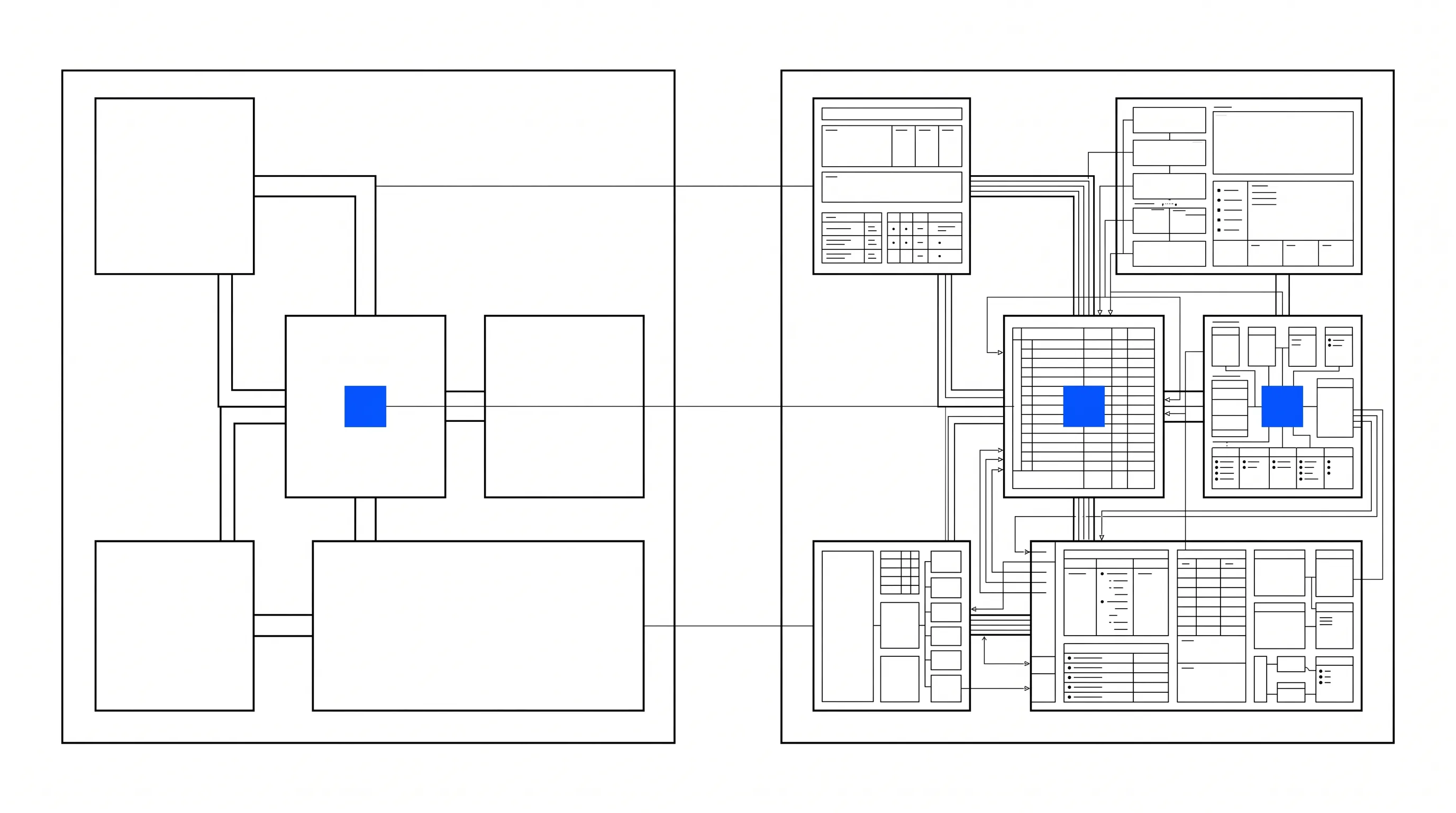
Cutting length and cutting content are different operations, and only one helps. Sort each slide by the job it does: carries the argument, supplies evidence, answers a question in this room, or answers one from a later conversation. The last group leaves the deck.
The pattern
A deck is too long. The instruction is to cut it. Someone shrinks the whitespace and font size and trims the word count. The same forty slides, denser.
The deck is now shorter to click through and harder to follow. Every slide is still there, compressed.
Why it breaks
Only cutting content helps.
Removing content requires deciding that a specific thing does not need to be understood in this room, at this stage, by this audience. That is a judgment someone has to own, and it can be wrong. Reducing leading is a formatting change that nobody can be blamed for.
So teams reach for the safe operation, and the deck accumulates. Every slide has survived a dozen reviews because someone might ask about it. A deck built to answer every possible question is a deck with no argument in it. DocSend found in 2020 that investors spent over four minutes on pre-seed decks that went on to raise, and about a minute and a half on decks that did not.
What changes
Sort each slide by the job it does.
Most decks need four categories. Slides that carry the argument. Slides that supply evidence for a claim already made. Slides that answer a question the audience will ask in this meeting. Slides that answer a question they will ask in a later one.
The fourth category leaves the deck. It goes to the appendix, to the distribution version, or to the data room where a specialist will read it.
A fifth category is worth naming separately. It is internal thinking that reached the deck by accident. Some of it is competitive matrices built to settle an internal argument, and org charts that exist because someone asked for one. Some is timelines that show effort and leave out milestones. These are easy cuts, and nearly every deck still has them.
The practical result
The presented deck gets shorter, and the material that left it is still available where it is useful.
Meetings change shape. When the appendix carries the depth, the presenter can go to a specific slide to answer a specific question, with no need to pre-empt twelve questions nobody asked.
And the slides that remain get room. A claim that was fighting for a third of a page can have a page, and most such claims needed one.
The test is what the audience does not need yet, and the weight sits on “yet”.