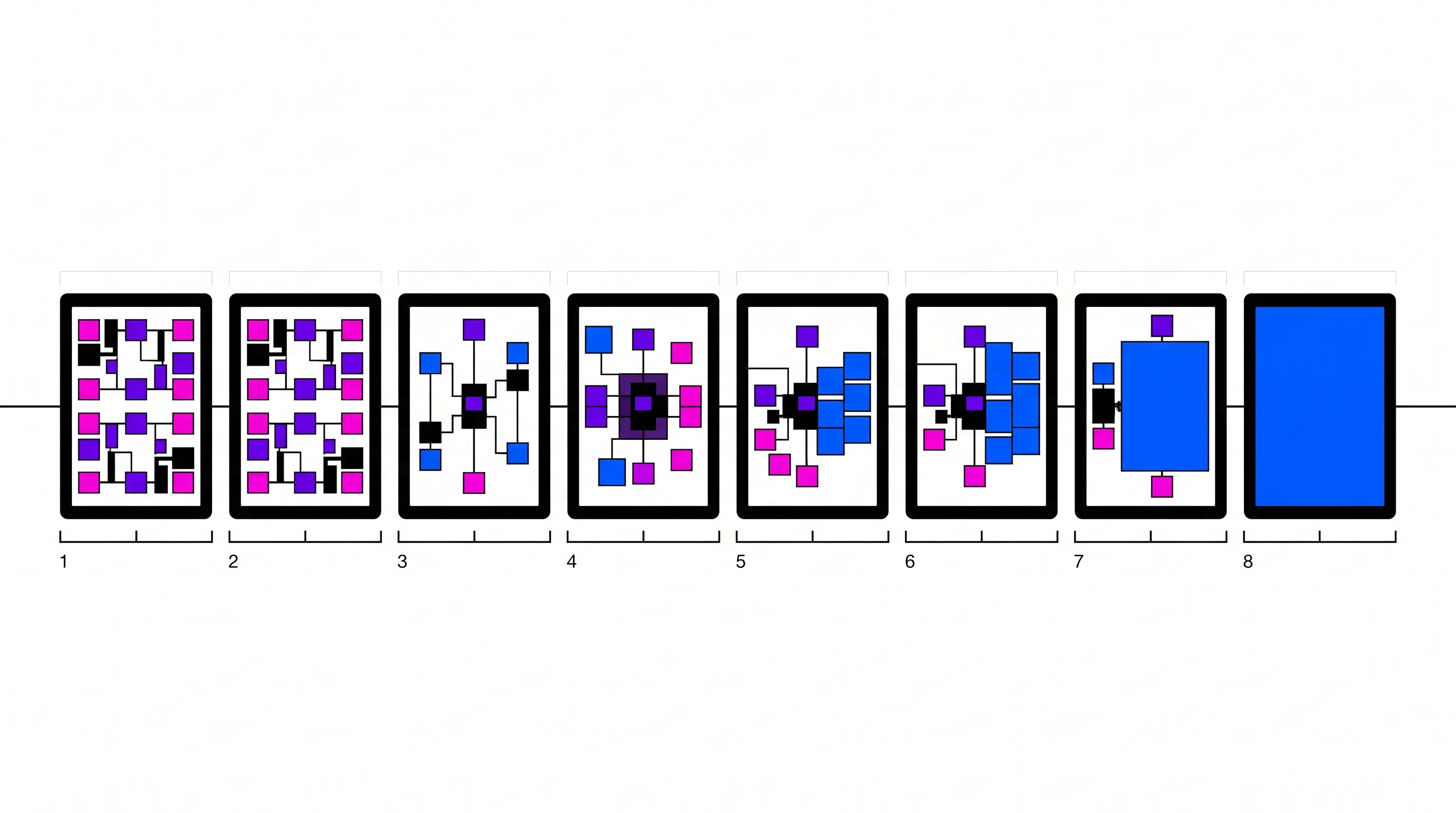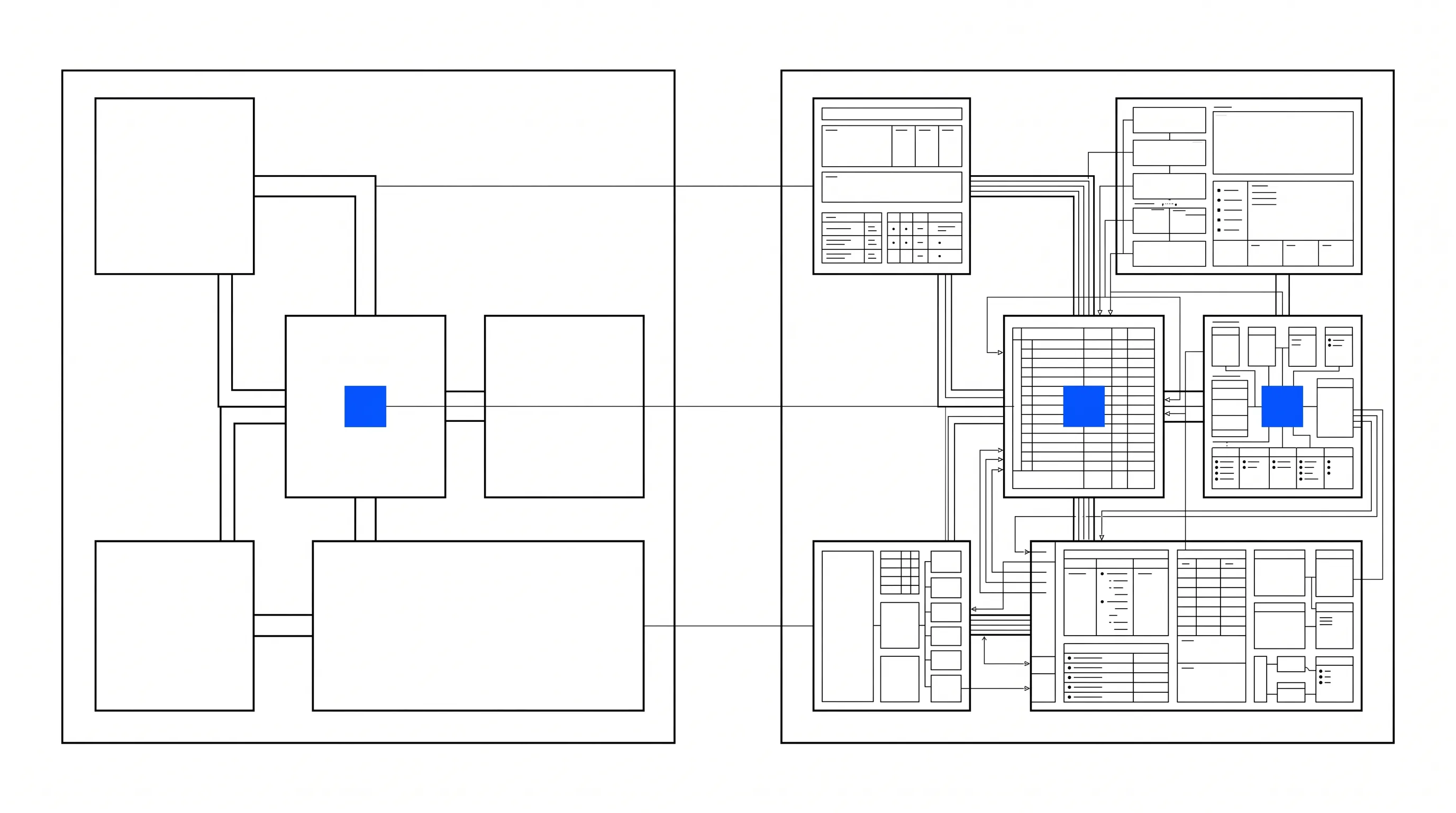
A presented deck has a narrator and a forwarded one does not, so one file cannot serve both. The room gets one idea per slide and a deliberate rhythm, and the inbox gets standalone explanation. Same claims, same order, different density.
The pattern
One file does both jobs. The presenter shows it live on Tuesday, and someone forwards it on Wednesday to a person who was not in the room.
Live, it is too dense. The presenter competes with their own slides while the audience reads ahead. Forwarded, it is too thin. A slide with four words and a diagram meant a great deal when someone explained it, and means little alone.
The same file is overloaded and underspecified, depending on who has it.
Why it breaks
One artifact has to meet two opposite requirements.
A presented slide has a narrator. Figure design guidance in PLOS Computational Biology makes the same split. It says to keep presented figures simple, and to add detail where the reader can take their time. The narration carries the explanation, the qualification and the emphasis, so the slide should carry signal and pacing. That means one idea, visible from the back, that does not compete for attention with the person speaking.
A forwarded document has no narrator. Everything the presenter would have said has to be legible on the page. It has to survive being read out of order by someone skimming on a phone between meetings. DocSend’s data from early 2022 put the average time an investor spent on a shared pitch deck at two minutes and 42 seconds.
Trying to satisfy both produces a document that satisfies neither. The compromise usually lands closer to the document, because the fear of being misunderstood when absent is stronger than the discomfort of a crowded slide.
What changes
Build one narrative and two expressions of it.
The presentation version has less explanatory density, visuals that support the spoken story, and a deliberate rhythm the presenter can work with.
The distribution version carries the context. More explanation, standalone logic, and static figures that remain understandable without narration. Where the live version showed one state of a mechanism and the presenter described the rest, the distribution version shows the sequence.
Both come from the same structure, so the claims, the order and the evidence are identical. What differs is density.
The practical result
The presenter stops racing their own slides, and the forwarded file stops needing a covering email that explains what slide eleven meant.
Version control gets easier, because the narrative is the master and the two outputs are expressions of it. A change to the thesis updates both; a change to pacing updates one.
And partnering, board and non-confidential variants become the same operation at a different density. Nobody builds three new decks from scratch under deadline.