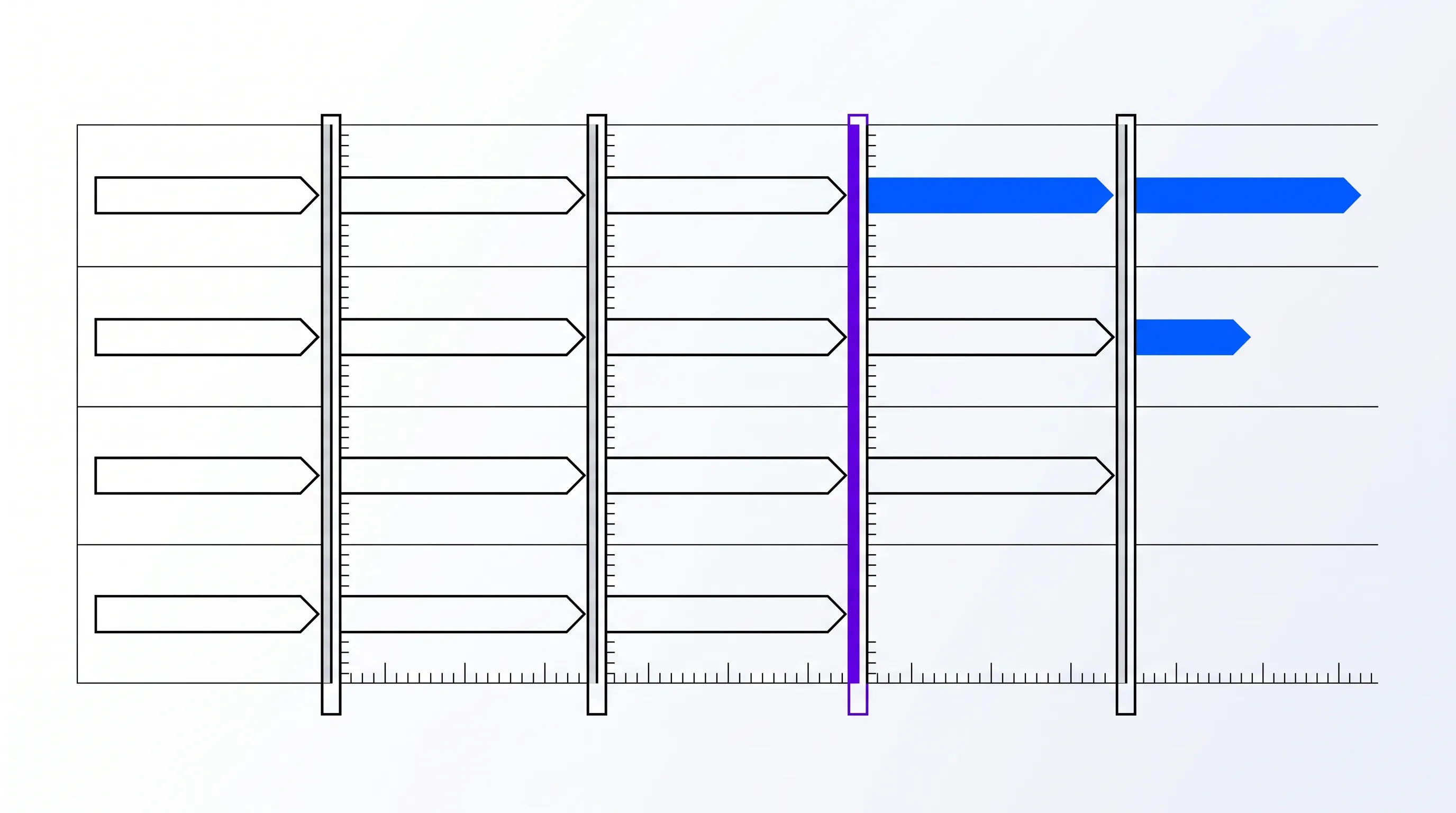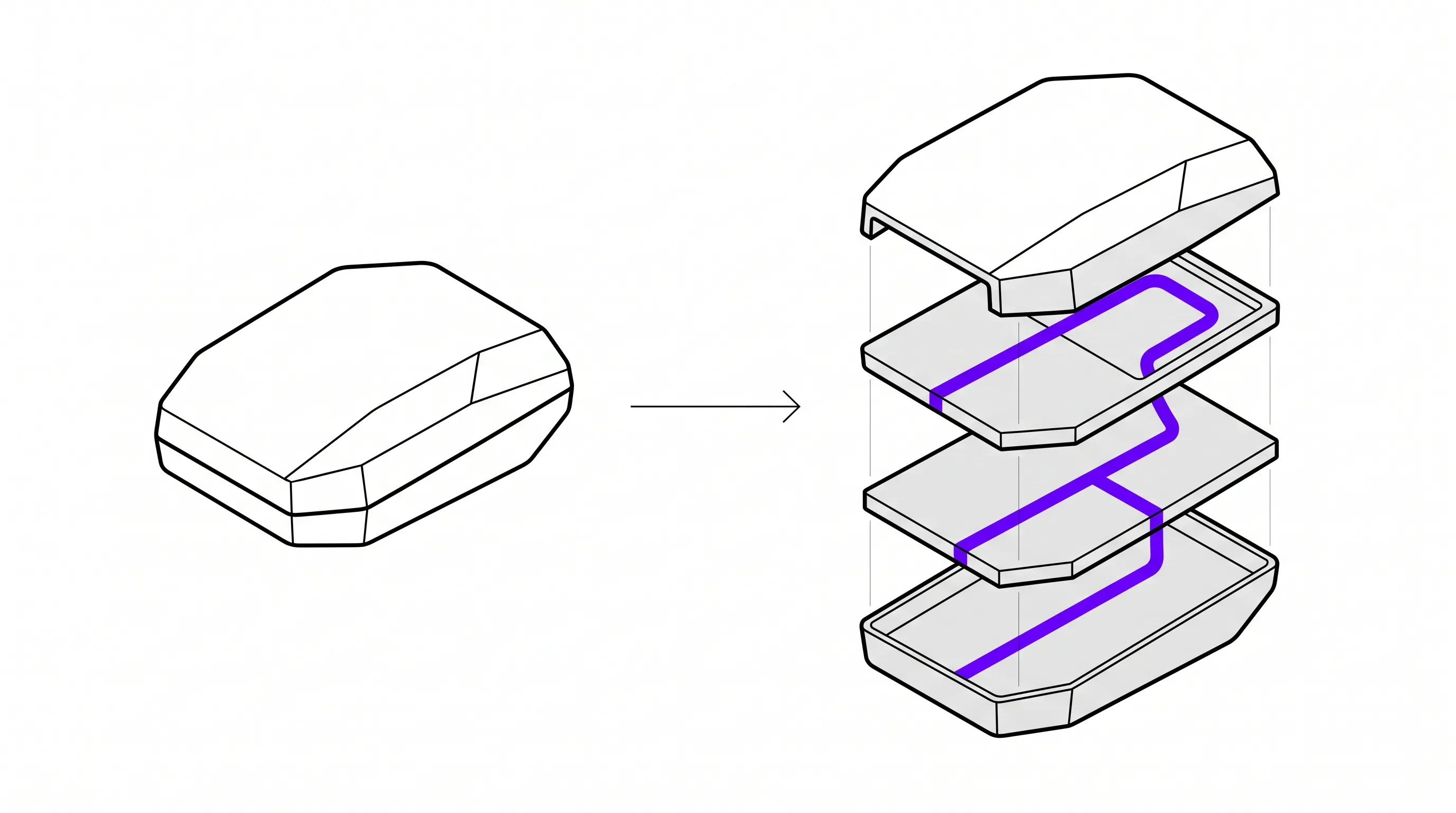
Interaction earns its place when the content has sequence, state, causality or progression that one frame cannot hold. Apply one test. If the viewer does nothing, do they still get the point? If yes, it is decoration, and a static figure is better and cheaper.
The pattern
The site has an animation. Molecules drift. A helix rotates. Something pulses on scroll.
It is well made and it communicates nothing. Remove it and the page says what it said before, in less time.
Why it breaks
People commission motion for the wrong reason. The page needs energy, and the competitor has one. The science also feels flat as static images. All of those are reasons to add movement, and none of them is a reason the movement should mean anything.
Motion is expensive attention. A viewer watching something move is not reading. If what they get in exchange is atmosphere, the trade is bad. It is worse on a page where the actual mechanism is a static diagram two sections down, competing with a rotating protein that explains nothing.
There is a second cost. Decorative motion trains the viewer to ignore motion, so when a later interaction carries the argument, they skip it.
What changes
Ask whether the content has an order.
A story needs interaction when one frame cannot hold its sequence, state, causality or progression. A mechanism where step three only makes sense after step two. A platform whose value is the same process applied to different inputs. A comparison where the point is what changes between two conditions. A pipeline where the viewer needs to choose a program and see it.
Those are cases where the viewer needs to control pacing, and where a static frame forces them to process everything at once.
If the content is a single fact, a static figure is the better format and the cheaper one. Deciding that is part of the work.
The practical result
There are fewer pieces, and each does a job. Motion appears where the science has an order and is absent where it does not, which is what makes the motion that remains read as information.
The interaction also stops being a separate media object. A browser piece responds to scroll, to state and to a viewer’s choice, and sits inside the surrounding information architecture. An embedded film sits beside it.
Test any interactive piece before you build it, with the viewer touching nothing. A point that still lands means decoration. A point that fails means the interaction is doing the explaining.