SCSS & Block-Style System
Forty-plus SCSS partials organized to mirror the theme's own structure, compiled with dart-sass, plus per-block stylesheets and single-purpose scripts.
What it does
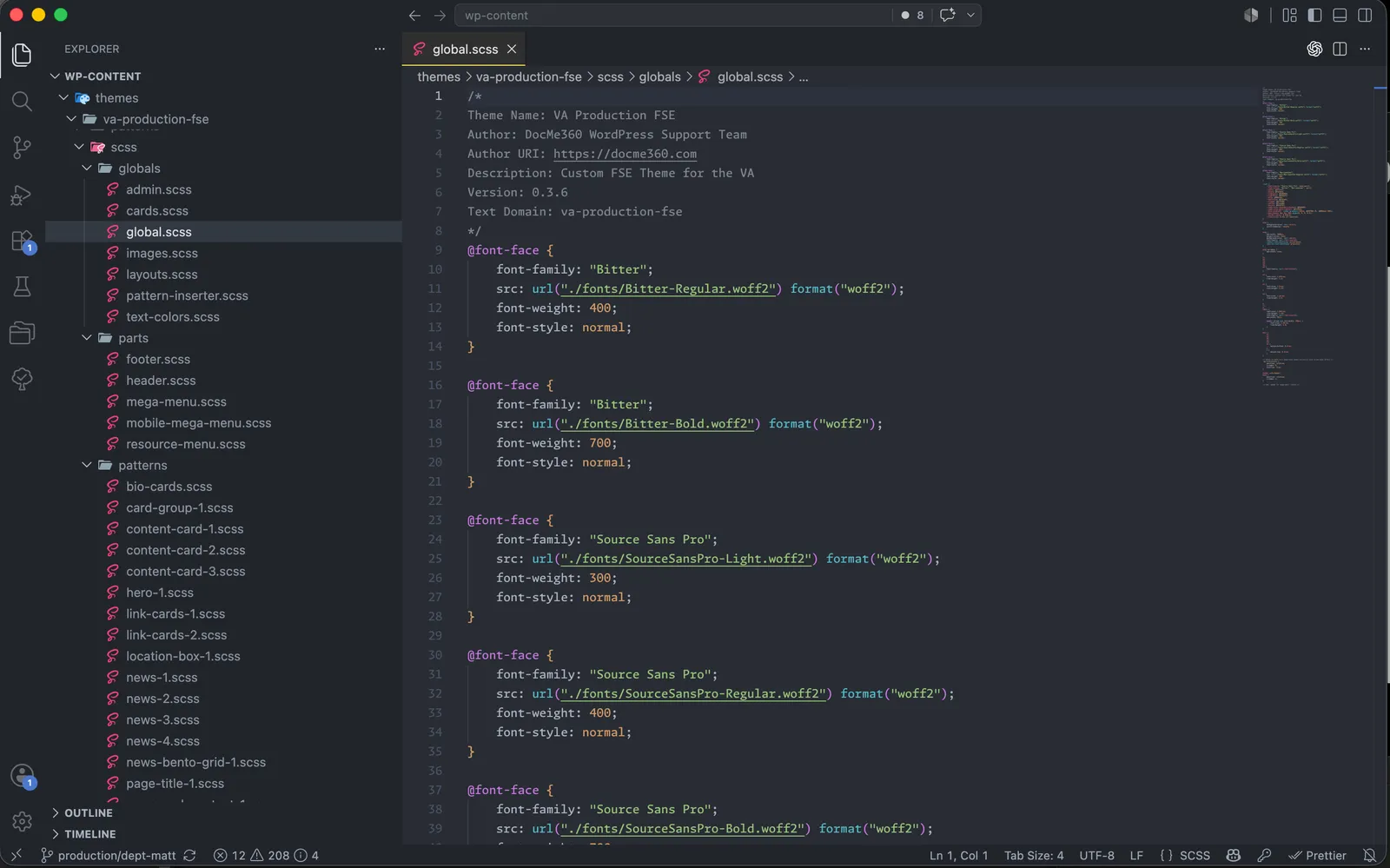
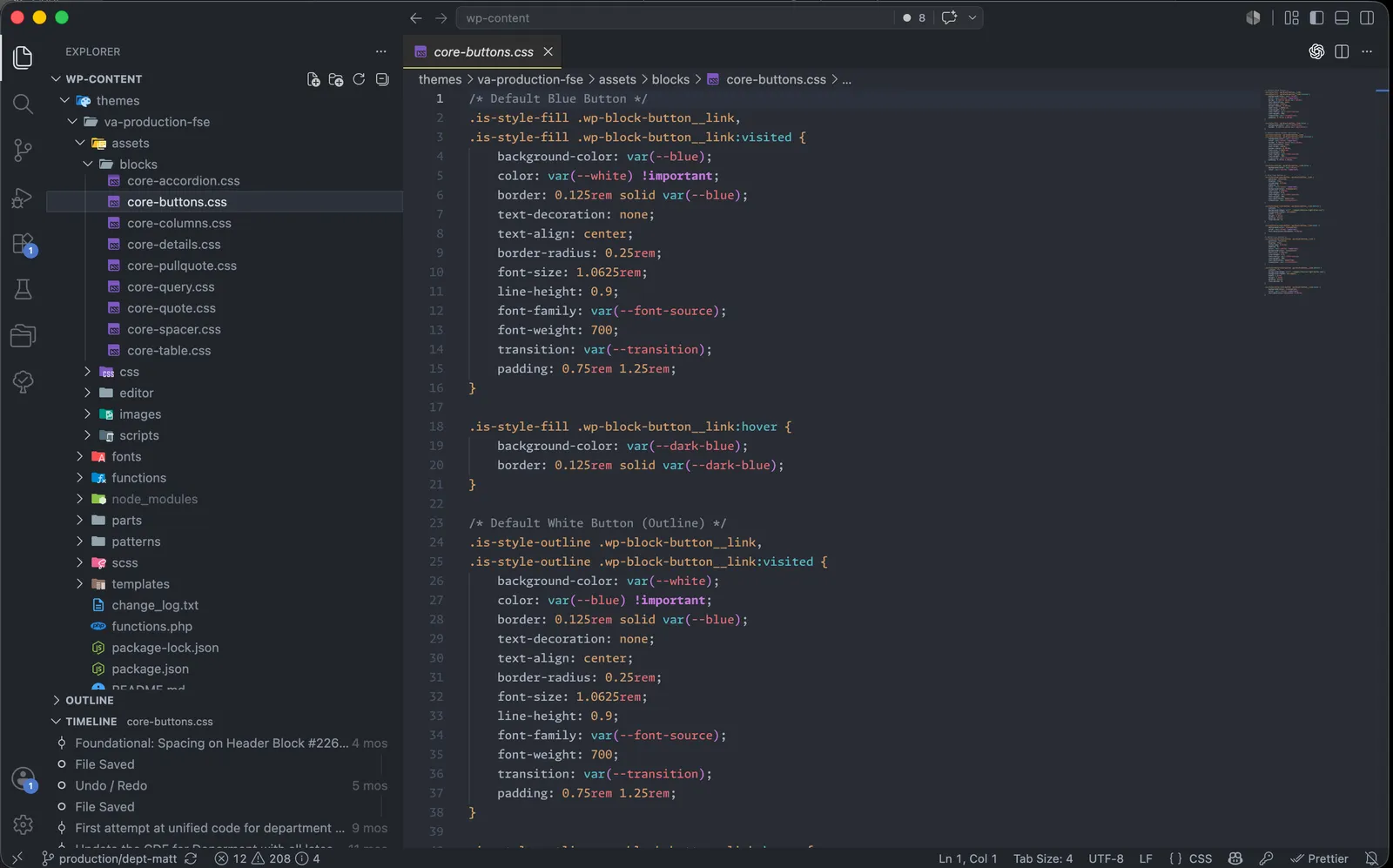
All styling lives as SCSS partials grouped exactly like the theme itself — globals, parts, patterns, templates, and special cases — compiled to a single stylesheet. Alongside it sit per-block CSS files that extend core blocks such as accordion, buttons, columns, query, quote, and table, and a set of small, single-purpose JavaScript files for behaviors like the mega menu, gallery lightbox, and modals.
Why it exists
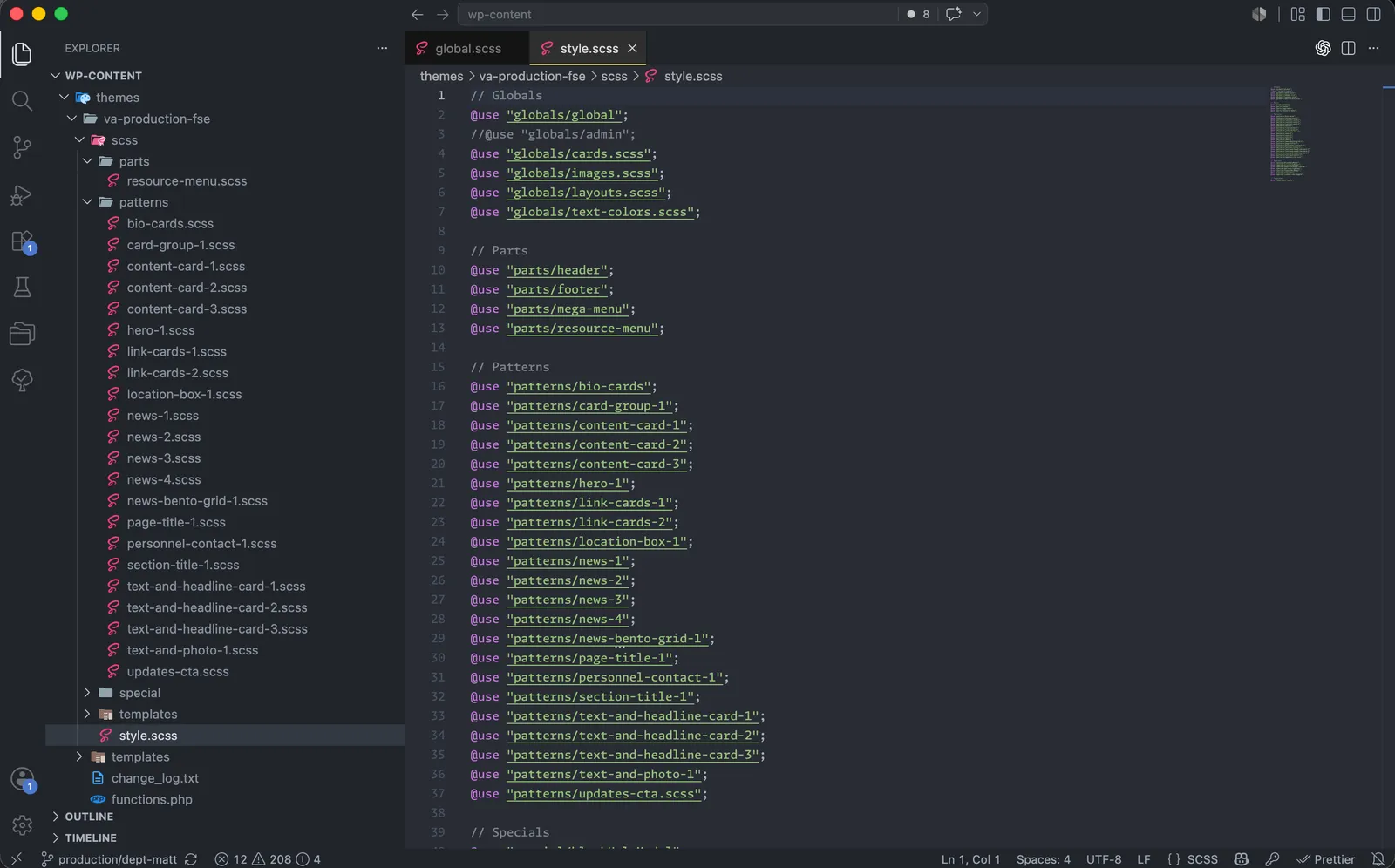
When stylesheets mirror the structure they style, an engineer moves from a pattern in the editor to the exact partial that governs it without searching. Keeping block styles and scripts small and named by purpose makes the front end as navigable as the PHP — the whole theme reads the same way, which is what keeps a long-lived platform maintainable.
Engineering considerations
SCSS compiles through a dart-sass watch script, with every partial imported from one entry file and its directory mirroring the theme’s template, part, and pattern vocabulary. Block-specific styles are registered as core block stylesheets rather than global overrides, so they load with the blocks that use them, and each JavaScript file is enqueued individually so a page loads only the behavior it needs.